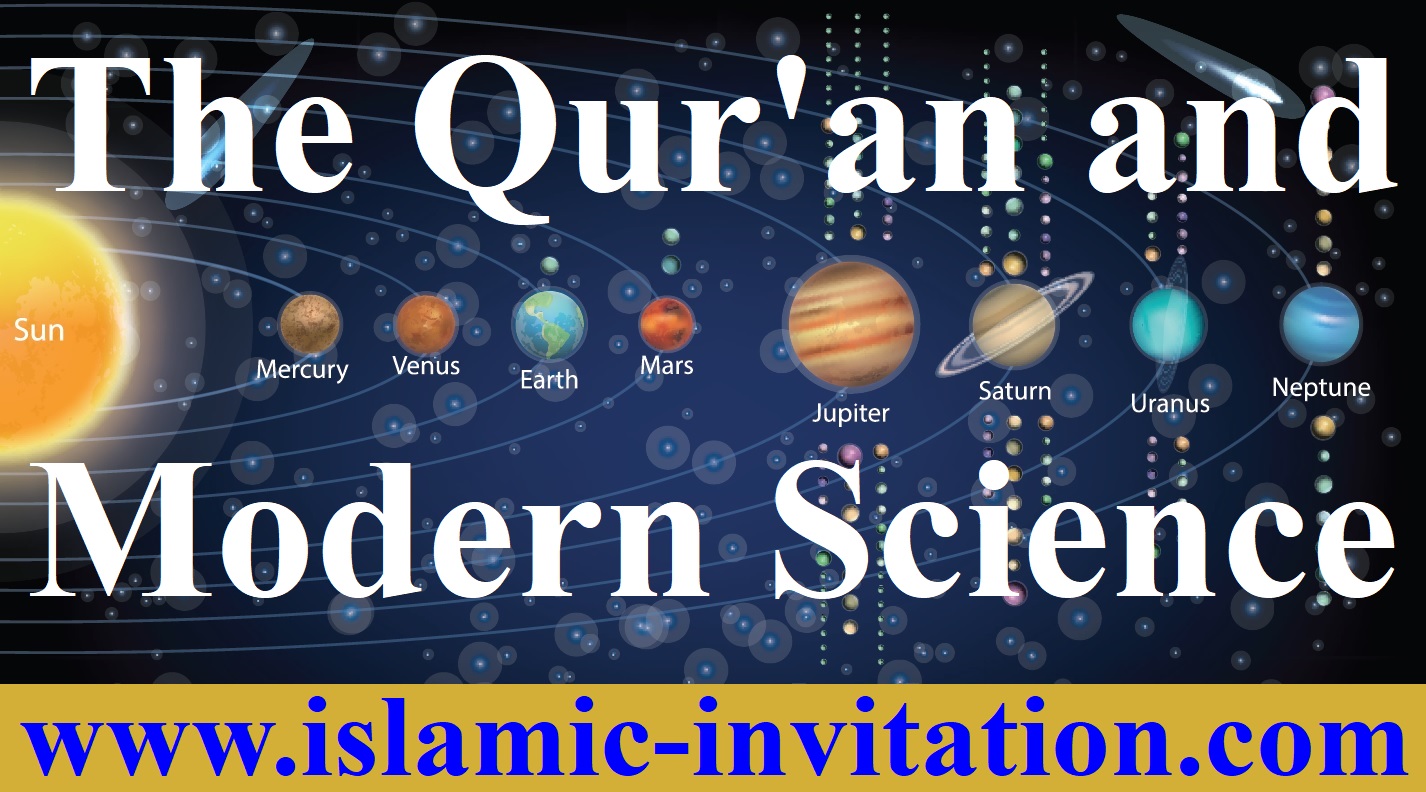
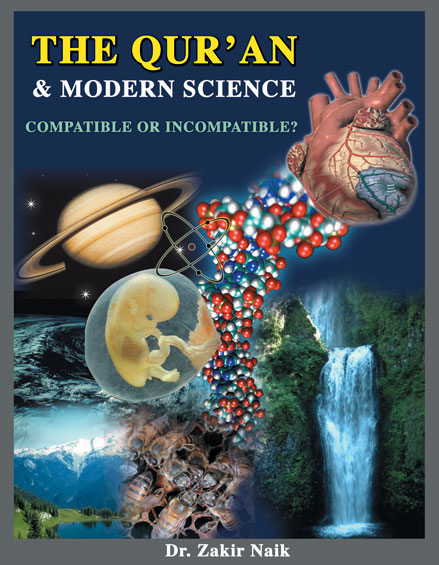
In his popular lecture and book, The Qur'an & Modern Science: Compatible or Incompatible?, Dr. Zakir Naik argues that the Qur'an is fully compatible with established scientific facts. He clarifies that the Qur'an is not a "book of science" but a "book of signs" (Ayats), containing over 6,000 verses, more than 1,000 of which refer to the natural world.
Dr. Naik’s core argument is that the Qur’an contains scientific information that was unknown 1,400 years ago, which he presents as proof of its divine origin.
Key Scientific Areas Addressed:
Astronomy: He cites verses that align with the Big Bang Theory (describing the universe as a "joined entity" before being "cloven asunder") and the expansion of the universe.
Hydrology: He points to descriptions of the water cycle, including evaporation, cloud formation, and rain, as being remarkably accurate.
Embryology: Naik highlights verses describing human development in the womb, specifically the stages of a "clinging substance" ('alaqah) and the "chewed-like lump" (mudghah).
Geology: He discusses the role of mountains as "stakes" or "pegs" that stabilize the Earth’s crust, comparing this to the concept of isostasy.
Oceanography: He references the "barrier" between two seas where they meet but do not mix, as described in modern oceanographic studies.
Methodology: Dr. Naik emphasizes that he only compares the Qur'an with established scientific facts, not with unproven theories or hypotheses, because science can take "U-turns" while divine revelation is considered absolute.






.jpg)