×
Human Nature and Upbringing: Why Does the Influence of Islam Remain After Leaving It?
Morality in Islam

Human Nature and Upbringing:

Why Does the Influence of Islam Remain After Leaving It?

Prepared by Dr. Raji Reda-Allah
www.islamic-invitation.com

Introduction

Some people think that leaving belief in Islam is nothing more than a change in intellectual convictions. In reality, however, the matter is more complex. A person is not shaped by ideas alone. Every human being is born upon the natural human disposition upon which Allah created mankind, and is then influenced by upbringing, language, customs, family, and society. Therefore, changing one's beliefs does not necessarily erase the effects of one's early upbringing.

The Prophet ﷺ said:

"Every child is born upon the natural human disposition. Then his parents make him a Jew, a Christian, or a Magian."
(Agreed upon by al-Bukhari and Muslim)

Allah says:

"So direct your face towards the religion, inclining to the truth—the natural human disposition established by Allah upon which He created mankind."
[Qur'an 30:30]


How Does the Influence of Islam Remain After Leaving It?

Some people may abandon belief in Islam, yet the effects of an Islamic upbringing may remain in their language, customs, memory, and identity for a long time.

They may continue using expressions such as In shā' Allāh (God willing), Alḥamdulillāh (Praise be to Allah), and Bismillāh (In the name of Allah), because these have become part of their everyday language. They may also continue to feel an aversion to certain things they were raised to avoid, because deeply rooted habits are often stronger than mere intellectual convictions.

Some also continue to attend Ramadan family meals or Eid gatherings in order to preserve family ties and their sense of social belonging, rather than regarding them as religious observances.

Some former Muslims also remain preoccupied with Islam; they read about it and discuss it. However, neither of these patterns should be generalised to everyone, as every person's experience is unique.

For this reason, some writers have compared this phenomenon to someone who gave up drinking coffee but continued spending time talking about it, opposing it, and promoting an alternative. This is a rhetorical analogy that helps illustrate the idea; it is not scientific evidence.


The Islamic Perspective

According to Ahl al-Sunnah wa al-Jamā'ah (the Sunni mainstream), divine revelation does not contradict reason; rather, it guides and directs it.

Allah says:

"Say, 'Produce your proof, if you are truthful.'"
[Qur'an 2:111]

He also says:

"Will they not then reflect upon the Qur'an?"
[Qur'an 4:82]

Shaykh al-Islam Ibn Taymiyyah (may Allah have mercy on him) said:

"Clear reason does not contradict authentic revelation."

Therefore, sound reason can never contradict authentic revelation. Any apparent contradiction arises only from misunderstanding or weak evidence.

For this reason, when a Muslim encounters a doubt, they return to the Qur'an and the Sunnah according to the understanding of the righteous early generations (al-Salaf al-Ṣāliḥ), consult scholars, and do not make short videos or widely circulated claims on social media the basis of their faith.


Islam Does Not Oppose Thinking and Reason

One common misconception is the claim that Islam discourages thinking. In reality, Islam calls people to use their reason, reflect, and contemplate Allah's signs in both creation and revelation. It commands people to produce evidence and forbids following mere conjecture.

Allah says:

"Will they not then use their reason?"
[Qur'an 36:68]

He also says:

"So that they may reflect."
[Qur'an 7:176]

And He says:

"So that they may understand."
[Qur'an 6:65]

He also says:

"Indeed, in the creation of the heavens and the earth and the alternation of the night and the day are signs for people of understanding."
[Qur'an 3:190]

Islam does not forbid sincere questions. Rather, it encourages seeking authentic Islamic evidence and searching for the truth in the light of the Qur'an and the Sunnah according to the understanding of the righteous early generations (al-Salaf al-Ṣāliḥ), on the basis of knowledge, justice, and fairness, free from personal desires and emotional reactions.


An Invitation to Seek the Truth

A person may experience doubts or confusion, but the remedy is to seek knowledge, be sincere in the pursuit of the truth, consult scholars, and pray that Allah guides them.

Allah says:

"So ask the people of knowledge if you do not know."
[Qur'an 16:43]

He also says:

"As for those who are guided, He increases them in guidance and grants them their righteousness."
[Qur'an 47:17]


The Door of Repentance Is Open

No matter how far a person has drifted away from their Lord, the door of repentance remains open.

Allah says:

"Say, 'O My servants who have transgressed against themselves, do not despair of the mercy of Allah. Indeed, Allah forgives all sins. Indeed, it is He who is the All-Forgiving, the Most Merciful.'"
[Qur'an 39:53]

The Prophet ﷺ narrated that Allah says:

"O son of Adam, so long as you call upon Me and place your hope in Me, I will forgive you for whatever you have done, and I do not mind..."
(Narrated by al-Tirmidhi and authenticated by al-Albani.)

Whoever is sincere in repentance will find a Most Merciful Lord who accepts those who repent and guides those who sincerely seek the truth.


Conclusion

The methodology of Ahl al-Sunnah wa al-Jamā'ah gives priority to authentic revelation while harmonising it with sound reason and the natural human disposition. It is founded upon justice and fairness, faithfulness in transmission, and careful verification before making judgements.

For this reason, the effects of the natural human disposition and upbringing may remain within a person for a long time, even if they become obscured by doubts or desires. However, they are not a substitute for seeking guidance from Allah and following the path of knowledge and truth.

Whoever finds doubts within themselves should let them become a motivation to search for the truth rather than a reason to turn away from it. They should know that Allah guides those who are sincere in seeking guidance, and that His mercy encompasses all things.

We ask Allah, the Exalted, to keep us steadfast upon Islam, to grant us beneficial knowledge and righteous deeds, and to guide every seeker of the truth to His Straight Path.

www.islamic-invitation.com


All the materials that are available for Raji Redha-Allah

Related Articles

Excessive Exposure Dulls Sensitivity
Morality in Islam
Excessive Exposure Dulls Sensitivity

Excessive Exposure Dulls Sensitivity By Sheikh Muhammad 'Ata Ibrahim Abdul Kari...

Warning Against Using the Greeting “Namaste” Without Understanding Its Original Belief
Morality in Islam
Warning Against Using the Greeting “Namaste” Without Underst...

Warning Against Using the Greeting  “Namaste” Without Understanding Its Origin...

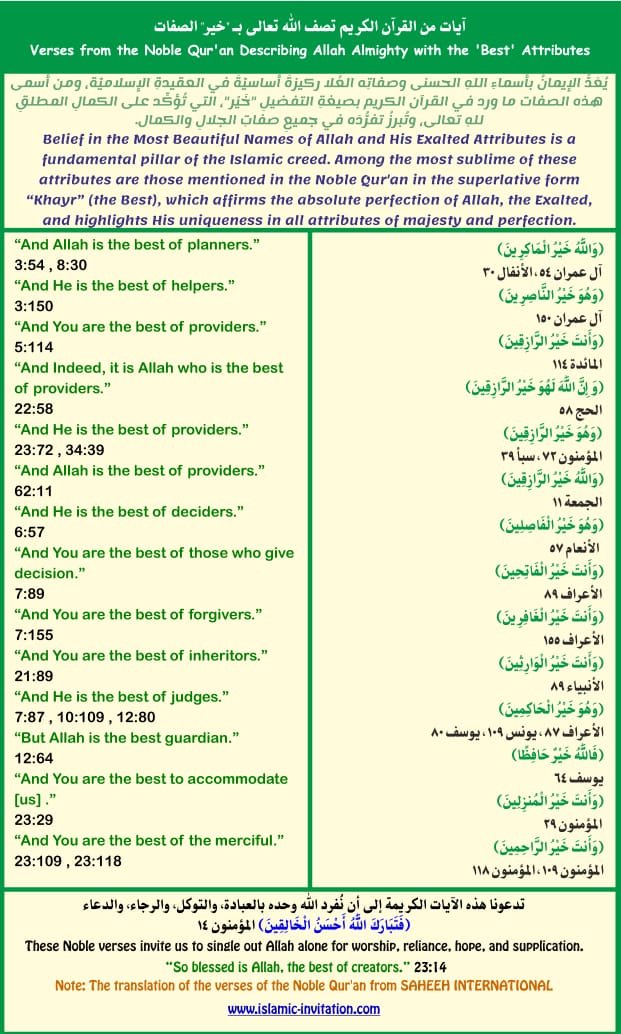
Verses from the Noble Qur'an Describing Allah Almighty with the 'Best' Attributes
Morality in Islam
Verses from the Noble Qur'an Describing Allah Almighty with...

Verses from the Noble Qur'an Describing Allah Almighty with the 'Best' Attribu...

+